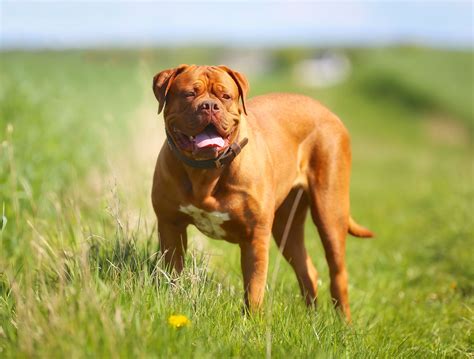
Dogue de Bordeaux, známy aj ako French Mastiff, Bordeaux Mastiff alebo Bordeauxdog, patrí medzi najstaršie francúzske plemená a jeho história siaha tisíce rokov dozadu. Je to veľký, svalnatý a impozantný pes, ktorý si získava pozornosť už na prvý pohľad, no zároveň je silno naviazaný na svoju rodinu a v domácom prostredí býva pokojný, mierumilovný a oddaný.
Hoci na prvý pohľad pôsobí ako strážca s prísnym výrazom, v skutočnosti je to plemeno známe lojalitou, citlivým vzťahom k ľuďom a silným ochranárskym inštinktom. Práve preto sa okolo Dogue de Bordeaux vytvoril bohatý vývojový príbeh, v ktorom sa prelínajú vojnové použitie, lov, stráženie majetku, výstavné úspechy aj neskoršie obnovovanie populácie plemena.
História a pôvod plemena
Dogue de Bordeaux pochádza z Francúzska, konkrétne z oblasti Bordeaux. Pôvodne existovali dva typy Dog de Bordeaux: menší Doguin, ktorý dnes už neexistuje, a väčší pes, ktorého poznáme dnes.
The Dogue de Bordeaux is one of the oldest French dog breeds, with roots that trace back thousands of years. Some experts believe their ancestors were used by the Romans in battle, while others point to ancient Molosser dogs brought to Europe by trading caravans and military campaigns. The Dogue de Bordeaux was known in France as early as the 14th century, particularly in southern France in the region around Bordeaux. Hence, the city lent its name to this large dog, "dogue" being the French form of the English word.[1]
Historically, boli využívaní ako vojnové psy, strážne psy na francúzskych majetkoch, poľovnícke psy a aj ako haulage dog, teda pes určený na ťahanie nákladu. By the Middle Ages, the Dogue de Bordeaux had found its place in French society-not as a lapdog, but as a working dog used to guard castles, pull carts, and hunt boar.
Sadly, like many of the Molosser breeds, Dogues de Bordeaux were used in the fighting pits, often against bull or bear. Some sources mention, že sa ich odvaha uplatnila aj v bojoch proti iným veľkým zvieratám, ako ovce či dobytok, inými psami. Vzhľadom na ich silu a húževnatosť boli cenené ako bojové psy a ich rodová línia sa vyvíjala v prostredí, kde sa oceňovala odvaha.
The breed’s history hasn’t been smooth sailing. During the French Revolution, when symbols of the aristocracy were targeted, many Dogues were wiped out due to their close association with nobility. Then came the World Wars, which saw their numbers dwindle even further.
Plemeno suffered a setback in the French revolution in the 1780s when they were slaughtered alongside their aristocratic owners. The breed suffered a setback in the French revolution in the 1780s when they were slaughtered alongside their aristocratic owners.
Dochované údaje ukazujú, že rozmanitosť plemena i naďalej pretrvala. V 19. storočí sa spomínajú dogy z troch oblastí: Toulouse, Paris a Bordeaux. Táto rozmanitosť sa prejavovala farbou, osrstením, typom záhryzu a ďalšími miernymi zmenami, zatiaľ čo štruktúra tela, váha a veľkosť si boli podobní.
V rokoch výskumu napísal J. publikovaný Meguinom. štandard Dogue de Bordeaux. Tento štandard bol dvakrát upravený Dr. francúzskych autorít. Zostavovaní tohto štandardu pomáhal aj pán Brooke, Dr. Mangentas dostala najvyššie ocenenia v Jardin d'Acclimatation v Paríži, výstavy psov.
In 1863, the first canine exhibition was held at the "Jardin d'Acclimatation" (at the time known as the "Jardin Zoologique d'Acclimatation" in the Bois de Boulogne public park) in Paris, France. The first Breed Standard was written in 1910. The breed was first exhibited in France in 1863 after which time it gained in popularity not only in their home country but in other parts of the world.
V prvých desaťročiach 20. storočia a neskôr sa plemeno vyvíjalo vďaka vzrastajúcemu záujmu o Dogue de Bordeaux. During the 1960s, a group of breeders of the Dogue de Bordeaux in France, headed by Raymond Triquet, worked on the rebuilding of the foundation of the breed. V šesťdesiatych rokoch Dr. Maurice v roku 1971. stal známym po celom svete, bol dopyt po Dogue de Bordeaux iba otázkou času.
Although the Dogue de Bordeaux first arrived in the USA in the 1890s for the show ring, the first documented Dogue de Bordeaux of modern times appeared in 1959 by the name of Fidelle de Fenelon. Between 1969 and 1980, imported Dogues de Bordeaux in the US were scarce, limited to a few breeders who worked closely with the French Dogue de Bordeaux Club, the SADB. The breed was first "officially" introduced to American purebred enthusiasts in an article written in 1982 by the American anthropologist Dr. Carl Semencic for Dog World magazine.
When Semencic's first article on the breed was published, there were no Dogues de Bordeaux in the United States. There were 600 examples left in the world, mostly in France, the Netherlands and East Berlin, and the breed's numbers were on the decline. Since then, the Dogue de Bordeaux has taken hold in the United States and can be found in greatly increasing numbers across the country.
The Dogue de Bordeaux has been supported by multiple breed clubs throughout the years, and has finally found its way to full American Kennel Club recognition through the assistance of the Dogue de Bordeaux Society of America. The breed is recognized by many kennel clubs around the world. Najvýznačnejšími sú FCI, The kennel Club (UK) a United Kenel Club (USA). MOLOSS clubu je v Bratislave. roku 1991 odčlenením od klubu málopočetných plemien. základňou však patrí medzi väčšie kynologické kluby.
Na Slovensku iba pred 27. rokov Dr. uznávaná mnohými kynologickými organizáciami po celom svete. Slovanov. už v 4.storočí p.n.l. ktoré prekvitalo najmä v 1. storočí n.l. nálezy na území dnešnej Bratislavy. ríše. Takže možno povedať, že po 19. molossy, potomkovia veľkých psov keltských panovníkov a rímskych légií.
Vzhľad, stavba tela a typické znaky
The Dogue de Bordeaux is a massive, muscular breed that commands attention the moment it enters a room-or, more likely, sprawls across your entire lounge. The Dogue de Bordeaux is a well balanced, muscular and massive dog with a powerful build. Powerful, stocky, athletic, imposing.
Samce typicky vážia medzi 60-68 kg, zatiaľ čo samice sa pohybujú v rozmedzí 45-50 kg. Ideal height at the shoulder: dogs 60-68 cms (23½ - 26¾ ins); bitches 58-66 cms (22¾ - 26 ins).
The body of the Dogue de Bordeaux is thick-set, with a top-line that has a slight dip (topline is never completely straight) and a gentle rounded croup. The breed is set somewhat low to the ground and is not tall like the English Mastiff. The distance from the deepest point of the chest to the ground is slightly less than the depth of the chest.
Ich stavba tela je pevná, s širokým hrudníkom, hrubým krkom a silnými končatinami. The front legs should be straight and heavy-boned, well up on pasterns, down to tight cat-like feet. Hind legs strong and muscular. Well-angulated stifles. Well-developed second thigh. Strong. Toes tight. Nails strong and curved. Pads well developed and supple. Well up on his toes despite his weight.
One look at a Dogue de Bordeaux’s face and you’ll understand why they’re such a hit on social media. Their massive, wrinkled heads are one of the largest among all dog breeds, and their trademark droopy jowls give them a perpetually concerned (yet endearing) expression. The massive head is a crucial breed characteristic. The Dogue de Bordeaux is claimed to have the largest head in the canine world, in proportion to the rest of the body.
The skull is broad, wider at ears than eyes. The upper region of the skull is slightly rounded from side to side. Pronounced stop forming a near right angle with the muzzle. Distinct median groove, lessens towards the back of the skull. The forehead is a prominent feature of the face but does not overhang it. The head is slightly furrowed with fine symmetrical wrinkles on each side of the median groove, but without excess. These are mobile when the dog is alert. Prominent cheeks due to very strong muscle development.
The muzzle is powerful, short and slightly hollowed below the eyes with moderate folds, the width hardly decreasing towards the tip of the muzzle, when viewed from above looks square. Topline of muzzle is slightly turned up. Length from nose to stop between a quarter and one third of the length of the head. Broad, well-opened nostrils, well pigmented according to mask colour. Jaws very powerful and broad. Lower jaw curves upwards. The chin is well defined and must not overlap the upper flew excessively nor be covered by it. Upper flew thick, moderately pendulous in profile and shows a rounded lower line.
Oval, set wide apart. Frank expression. Showing no haw. Relatively small, of slightly darker colour than coat. The front of the base of the ear is slightly raised. They must fall forward and down but not hang limply, the front edge being close to the cheek when the dog is alert. The tip of the ear is slightly rounded, not reaching beyond the eye.
Strong, muscular and solid, skin supple and loose. Circumference almost equals that of head. The well defined dewlap starts at the level of the throat forming folds down to the forechest without exaggeration. The skin is thick and loose fitting, without excessive wrinkles.
Fine, short and soft to the touch. The Dogue de Bordeaux has a short, fine coat that lies close to the skin. Self-coloured, in all shades of fawn, from mahogany to Isabella. The standard colour is fawn, which can vary from a light beige to a deep mahogany. All shades of fawn, from a dark red fawn to a light fawn. A rich coat color is considered desirable. Chocolate highly undesirable. Good pigmentation is desirable. Black mask - mask must not extend above the eyes. Slight black shading allowed on ears, skull, neck and down the topline. Any other colour or combination of colours unacceptable. Limited white patches are permissible on the chest and the extremities of the limbs. White patches on the chest and toes are allowed in the breed standard and often add a charming splash of contrast.
| Prvok | Štandard / údaj |
|---|---|
| Výška psov | 60-68 cms |
| Výška súk | 58-66 cms |
| Farba srsti | fawn, mahogany, Isabella |
| Maska | black mask alebo red mask |
| Rozsah dĺžky papule | between a quarter and one third of the length of the head |
Povaha, temperament a rodinný život
The Dogue de Bordeaux may look like a bouncer at a nightclub, but inside? They’re a total softie-at least with the people they love. These dogs are incredibly loyal, often forming strong attachments to their family. The Dogue de Bordeaux is an affectionate, calm breed that is devoted to their family. Despite their imposing size and serious expression, they are typically gentle and soft-natured at home.
Dog de Bordeaux je verný, lojálny a oddaný svojej rodine. Sú známi svojou trpezlivosťou a pokojnou povahou, čo z nich robí ideálnych rodinných spoločníkov. Ich silný ochranársky pud znamená, že budú vždy stáť pri svojich blízkych, no zároveň si zachovávajú mierumilovný prístup k hosťom, ktorí sú vítaní ich majiteľmi.
They’re affectionate but not clingy. A well-socialised Dogue de Bordeaux can be wonderful with children. Their natural patience and calm energy make them excellent family companions. Yes-if raised properly, they’re incredibly loyal, affectionate, and gentle with children. Just keep in mind their sheer size can be a bit much for toddlers, so supervision is always key.
With other pets, it depends heavily on how they’re raised. Early socialisation is key. Dog de Bordeaux si dokáže dobre rozumieť s inými psami, mačkami a deťmi, ak sú správne vychovávaní a/alebo spolu vyrastajú od šteniatka. Temperament Dog de BordeauxHoci Dog de Bordeaux pôsobí mohutne a sebavedome, v skutočnosti je to dobromyseľný a mierumilovný spoločník.
Despite their intimidating appearance, aggression isn’t typical of the breed. Poor training, lack of socialisation, or irresponsible ownership is usually to blame when behavioural issues occur. Preto je nevyhnutná včasná a dôsledná socializácia a výcvik, aby sa zabezpečilo, že váš pes nebude nadmerne plachý alebo reagovať na cudzích ľudí.
Hľadáte psa, ktorý by sa stal súčasťou vašej rodiny? Dog de Bordeaux je impozantné plemeno, ktoré si vás získa svojou vernosťou a láskou. Napriek svojmu mohutnému vzhľadu s vrásčitou tvárou a ovisnutými pyskmi sú títo psi v skutočnosti dobromyseľní a túžia po kontakte so svojimi majiteľmi. Ak si viete predstaviť ideálny koniec dňa v znamení odpočinku, relaxácie a pohody, potom si urobte priestor pre tohto úžasného spoločníka.
Výcvik a socializácia
It’s absolutely critical to start training and socialising from day one. Between 8 to 16 weeks, your Dogue de Bordeaux puppy is in their most important socialisation window. Why? Because a well-socialised Bordeaux grows into a calm, confident adult. Kľúčom k harmonickému spolužitiu s Dog de Bordeaux je dôsledný výcvik a skorá socializácia. Vzhľadom na ich silnú vôľu je dôležité začať s výcvikom už od útleho veku.
Positívne metódy posilňovania, ako sú odmeny a pochvaly, fungujú najlepšie. Use positive reinforcement-these dogs respond well to treats and praise, but not harsh correction. Harsh methods don’t work on this breed; they’ll either shut down or push back. The trick? Keep training short, consistent, and positive.
Yes and no. Dogue de Bordeaux dogs are intelligent, but also famously stubborn. Think of them like an old man who knows what he wants-and doesn’t move unless there’s a darn good reason. They’re smart but stubborn. While they understand commands quickly, they’re not eager to please like some breeds. Training needs to be consistent, calm, and reward-based.
Dogue de Bordeaux puppies are natural chewers. Their strong jaws can turn furniture into matchsticks in minutes if left unsupervised. Stock up on durable chew toys, redirect the chewing, and never encourage rough mouthing (even if it seems harmless). Puppies need loads of sleep-up to 18 hours a day. A calming dog bed in a quiet spot can make all the difference in helping them settle.
Pohyb, aktivity a mentálna stimulácia
Despite their hefty frame, Dogue de Bordeaux dogs don’t have endless energy. They’re not joggers. Not really. They’re more into lounging than marathon running. A couple of short daily walks and some mental stimulation will do the trick.
I need around an hour of gentle exercise each day. I’m calm but I still appreciate things to do! Short training sessions, gentle games and sniffing walks all help keep me content. Pravidelné cvičenie a mentálne stimulácie pomáhajú udržiavať psa šťastného a vyrovnaného.
Don’t expect high-energy chaos. Dogue de Bordeaux dogs are naturally laid-back and thrive on lounging with their people. Because of their guarding instincts and intelligence, boredom can lead to destructive behaviour. Rotate toys, introduce sniffy walks, and keep them engaged. V horúcich dňoch sa môžu ľahko prehriať, preto sú krátke prechádzky a pokojnejší režim praktickejšie ako dlhé a intenzívne záťaže.
They’re not joggers. This one’s super important: don’t over-exercise a Dogue de Bordeaux puppy. Their joints are still developing, and too much running or jumping can cause serious issues later on. Dogue de Bordeaux puppies grow rapidly, but the goal isn’t to bulk them up fast. In fact, fast growth can lead to skeletal problems.
Výživa a rast
Let’s be real-feeding a Dogue de Bordeaux isn’t cheap. These dogs eat a lot, but it’s not just about quantity-it’s about quality. Go easy on treats-especially high-fat ones.
Dogue de Bordeaux puppies grow rapidly, but the goal isn’t to bulk them up fast. In fact, fast growth can lead to skeletal problems. Proper nutrition matters from puppyhood, because a giant dog with no manners is hard to manage and a giant dog with poor body condition is even harder to keep healthy.
Zdravie, choroby a dĺžka života
Here’s the tough part: the Dogue de Bordeaux doesn’t have a long lifespan. On average, they live 5 to 8 years, with some individuals reaching 9 or 10 with excellent care. Sadly, not as long as we’d all like. The average lifespan is 5 to 8 years, although some live into their early 10s with excellent care.
Dog de Bordeaux sa dožíva priemerne 5 až 8 rokov. Toto plemeno je náchylné na niekoľko zdravotných problémov, vrátane torzia žalúdka (Bloat/GDV), ortopedické problémy, srdcové ochorenia, rakovina, epilepsia a hyperkeratóza labiek.
Unfortunately, the Dogue de Bordeaux is prone to a number of health issues. These joint problems are caused by abnormal development and can lead to pain or arthritis. Signs include limping, reluctance to climb stairs, or stiffness after resting. This condition causes the heart to enlarge and weaken. Symptoms might include fatigue, coughing, or rapid breathing. A life-threatening emergency where the stomach fills with gas and twists. Those adorable wrinkles? They trap moisture and debris, especially around the face and neck. Like many large breeds, Dogues are more susceptible to cancers, particularly bone cancers.
Aortic stenosis is a disease of the heart valve in which the opening of the aortic valve is narrowed.[26] One study suggests a high predisposition in the breed. Demodicosis is more prevalent in the breed than other dogs. A study in the UK found 0.9% of dogs had the condition compared to the general rate of 0.17%. For dogs under 2 years it was prevalent in 1.9% compared to 0.48%.
Data from the Norwegian Kennel Club indicates a mean litter size of 8.1 puppies (ranging from 2-17) for the breed.[35] The breed has a high stillborn and early neonatal mortality rate, with a stillborn rate of 14.2% and early neonatal mortality (death within 1 week from birth) of 10.4%. The average across all breeds in the study was 4.3% stillbirth and 3.7% early neonatal mortality.
Regular veterinary check-ups and a balanced diet are key to keeping your Dogue de Bordeaux healthy. Pravidelné veterinárne prehliadky a vyvážená strava sú kľúčové pre udržanie zdravia vášho Dog de Bordeaux.
Starostlivosť, hygiena a údržba
The Dogue de Bordeaux might not need fancy trips to the groomer, but that doesn’t mean they’re low-effort. That said, grooming time can be a lovely bonding experience if done right. Just be ready with towels.
Dog de Bordeaux nie sú nároční na údržbu srsti, ktorá je krátka a jemná, vyžaduje si len občasné prečesanie. Avšak ich vrásčitá tvár, ktorá produkuje sliny, si vyžaduje pravidelné čistenie, aby sa predišlo podráždeniu pokožky a infekciám. Those glorious jowls and forehead wrinkles need regular cleaning to prevent infections and yeast build-up.
Use a gentle dog shampoo to avoid drying out their skin. Nails: Trim every 2-3 weeks. Ears: Check weekly for dirt, wax or redness. Teeth: Aim to brush a few times a week using dog-safe toothpaste.
The Dogue de Bordeaux isn’t for everyone-but for the right person or family, they’re unforgettable. They’re gentle with their family, dignified with strangers, and downright goofy when they let their guard down. These dogs thrive in homes where they’re treated as one of the family. They need structure, socialisation, and a soft place to land-literally. A proper orthopaedic dog bed can make all the difference, especially for their big bones and ageing joints.
Vhodné do bytov a menších domov: Napriek svojej veľkosti sa dokážu dobre prispôsobiť menším priestorom, ak majú dostatok pohybu a pozornosti. Citlivé na chladné počasie: Ich krátka srsť neposkytuje dostatočnú izoláciu v mrazivých dňoch. Citlivé na teplé počasie: V horúcich dňoch sa môžu ľahko prehriať. Vhodné pre prvých majiteľov psov: S primeranou výchovou a socializáciou sa môžu stať skvelými spoločníkmi aj pre začiatočníkov.
Praktické údaje o plemene
| Vlastnosť | Údaj |
|---|---|
| Priemerná dĺžka života | 5 to 8 years |
| Hmotnosť psov | 60-68 kg |
| Hmotnosť súk | 45-50 kg |
| Výška psov | 60-68 cms |
| Výška súk | 58-66 cms |
| Veľkosť vrhu | 8.1 puppies |
| Stillborn rate | 14.2% |
| Early neonatal mortality | 10.4% |
Vývoj Dogue de Bordeaux je teda príbehom starobylého pracovného psa, ktorý sa z bojovníka a strážcu postupne stal verným rodinným spoločníkom s výraznou osobnosťou, silným telom a nezameniteľným vzhľadom.